

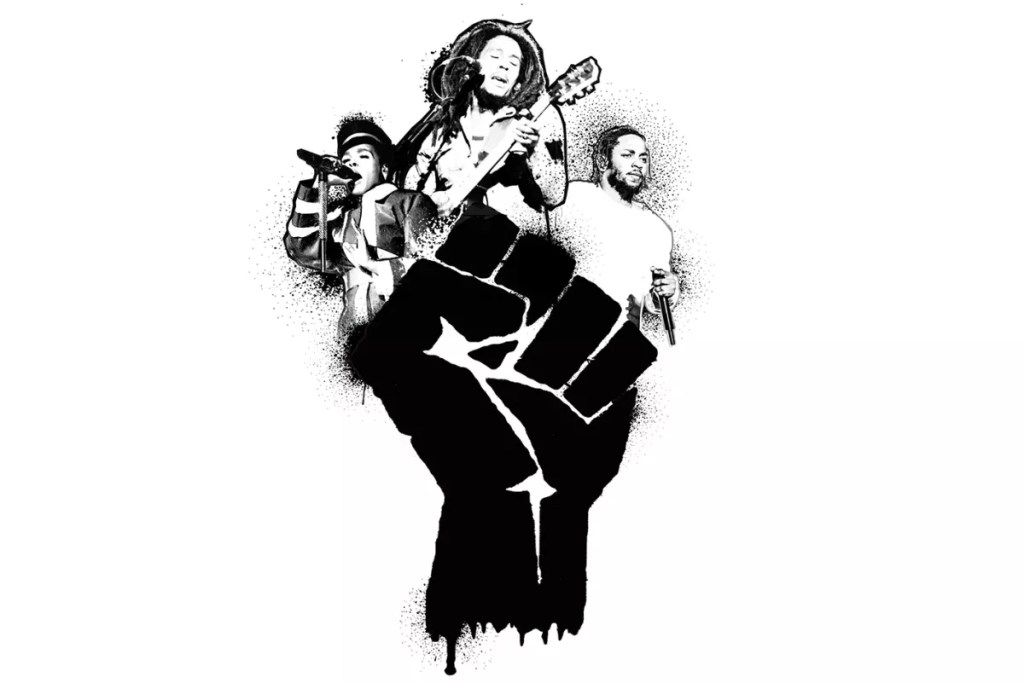
Rebels with a Cause
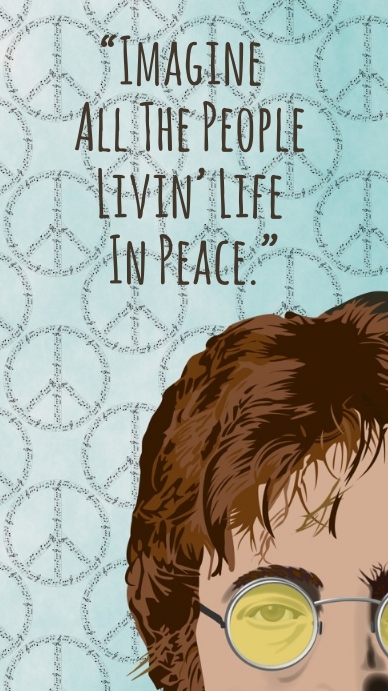
There are those that say there’s nothing worse than rebellion for rebellion’s sake. But music’s premier outspoken troubadours, Bob Dylan and Bruce “the Boss” Springsteen (King of the Rustbelt), are the kind of recalcitrant troublemakers that tend to hitch their wagons to social causes that actually mean something. That is, they’re the kind of stir-the-pot musicians that have long been admired for cutting through political doublespeak and writing songs that stir a narcotised nation out of apathy and put politicians on edge. Maybe that’s the beauty of certain transcendental artists – they tend to show the power and the danger of music. Other musicians have long used music as a tool to promulgate their activism, for example, Bob Marley, Rage Against the Machine and John Lennon, all protest musicians in their own right, have been known to induce a conniption or two in the political elite who generally prefer to sit idly behind gilded desks in Ivory Towers at Capitol Hill. Ironically, or perhaps just sadly, 51 years since Lennon released his iconic social hit “Imagine” and, with wars and political unrest raging in places like the Middle East and Ukraine, peace still unfortunately appears to be no more than a figment of our collective imagination. Nevertheless, the works of certain iconoclasts, music’s trailblazers if you will, possess the irresistible power to light a furnace for change.
Child of Rage: The Boss’s Bad-Ass Rise to Fame
Growing up in the mean streets of Freehold, New Jersey, Springsteen, born in 1949, was the son of Adele and Douglas Springsteen. Inspired by fellow New Jersey musician Frank Sinatra, Springsteen would often crank the radio up in his family’s small kitchen and bust out some of his now-iconic dance moves. Music, it seemed, was in his blood. Springsteen also touts Elvis Presley as a major musical influence, after he first saw him singing on the Ed Sullivan show between 1956-7. He would also later recall avidly following one of the Beatles’ much-anticipated American tours which further whet his appetite for everything music. The child of Italian immigrants on his maternal side who had emigrated through the infamous Ellis Island port, Springsteen’s family initially struggled to find their footing in a foreign and sometimes hostile land. His father’s side found their way to America riding on the crest of an earlier wave of Dutch immigration. The Springsteen’s took root in the 1600s in what was then known as the Colony of New Netherland (it would later splinter off into many of the present-day New England states).
Springsteen has often thanked his humble roots and drawn on them in his music to convey the stories of people living life on the fringes, the so-called margins, of society. It’s this visceral understanding of darkness and life’s underbelly that has irrevocably shaped and punctuated much of the Boss’ music and placed him on the political map and at the centre of controversy and polemic debate more than just a few times.
In 1964, when the Boss was just 15 years old, he bought his first guitar for a meagre $18.95 at the local Western Auto appliance store. Springsteen began playing with a local band called the Rogues. However, the very blue-collar Springsteens were destitute so when it came time to upgrade his guitar his mother took out a loan for $60 dollars to buy him a Kent guitar. He never forgot this act of generosity and he later immortalized the moment in his song The Wish.
Dirty old street all slushed up in the rain and snow.
Bruce Springsteen, The Wish
Little boy and his ma shivering outside a rundown music store window.
That night on top of a Christmas tree shines one beautiful star.
And lying underneath a brand-new Japanese guitar.
During the early 70s, Springsteen was signed to Columbia Records, and he began touring America with a unique style that mixed folk, rock n’ roll with rhythm and blues. He was usually accompanied by the E-Street Band. His initial albums including Greetings from Ashbury Park, N.J and The Wild, the Innocent and the E-Street Shuffle were all critically acclaimed, garnering significant praise, with some commentators comparing him to Bob Dylan. While the albums were lauded in music critic circles across the country, they were veritable commercial flops. It wasn’t until Born to Run was released in 1975 that he caught his big break, with the album peaking at number three on the American Billboard 200.
Springsteen had amassed a cult following during his early days and, with the release of Born to Run, this following blossomed into mass popularity. But in these days Springsteen never fashioned himself as a political figure and even when his songs touched on divisive subjects, he tended to skirt the attention, remaining, at least in interviews at the time, fairly politically aloof. In fact, when he performed at the “No Nukes” concert in 1976, he was considered the least political musician in the line-up. He even shied away from singing “Roulette,” a song about the pitfalls of nuclear energy. He also wrote and shelved a song entitled “They Killed Him in the Street,” about the ghastly and brutal assassination of Archbishop Oscar Romero in El Salvador. Subsequent albums including, The River and Nebraska flirted with political discourse, but Springsteen was still gun-shy on politics and not yet ready to face his own political reckoning. That was all about to change.
Born in the USA
While Springsteen’s early years were characterised by relative political neutrality, which could be mistaken for apathy, this all changed with the release of his seventh studio album, Born in the USA. The album, recorded in 1984, delves into various hot-button themes including the struggles of the disenfranchised working class, the perils of ‘Nam and the burgeoning gulf between the haves and the have-nots. The titular song, Born in the USA, was penned about the Vietnam War; a deeply unpopular conflict, wherein men were forcibly conscripted, with many perishing on the battlefield and others coming back home with profound mental health issues. The song drew inspiration from Ron Kovic’s 1976 biography Born on the Fourth of July, which charts the harrowing struggles of a disillusioned young Kovic who was sent off to fight in Vietnam, experienced paralysis as a result of injuries sustained while there and came back not as a war hero but as a social outcast and a pariah as the public’s mood had drastically shifted against the conflict abroad. Kovic’s biography spouts his anti-war sentiments after having seen first-hand the ugliness of the killing fields.
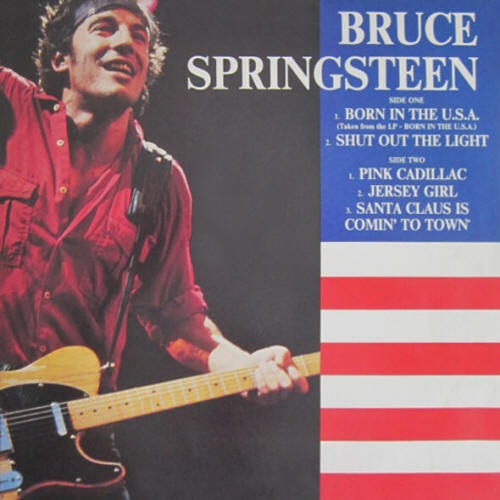
While Springsteen made it clear that Born in the USA was an anti-war protest song, this didn’t stop the Republicans trying to poach it for nefarious ends. In 1984, when President Ronald Reagan was running for his second term of office, his campaign team believed that his hardline supporters would vote for him no matter the competition. Hence, they focused their attention elsewhere: they knew Reagan needed mass appeal and since rock n’ roll was all the rage at the time, Reagan’s team thought it might be a good idea to tether his campaign to Springsteen’s rising star. They felt belting out “Born in the USA” at rallies would galvanise the masses with patriotic and national pride. But this would have distorted the song’s meaning; the chorus’ seemingly upbeat feel belies its dark undertones, which hark to the devasting costs of war. A campaign manager contacted the Boss and asked him if they could use the song. They got a resounding no!
This didn’t stop Reagan dropping Springsteen’s name at a rally in August of the same year. Reagan stood in front of a small crowd in Hammonton, New Jersey and said, “America’s future rests in a thousand dreams inside your hearts. It rests in the message of hope in the songs of a man so many young Americans admire—New Jersey’s own, Bruce Springsteen.” Given that the Republican party is not general noted for its empathy for the have-nots, Reagan’s ploy didn’t wash well with the Boss. This is because the Boss has always been noted for giving back to those who gave him everything and his quiet philanthropy is well known among his native Garden State community.
Springsteen became increasingly political throughout the nineties opposing anti-immigration policies in California and getting behind various unionist movements. In October 2007, Springsteen released another compelling and highly political album entitled Magic, which featured heavy criticism of the Bush Administration and the catastrophic harm of the Iraq and Afghanistan wars. Of the album, Springsteen commented at the time in an interview to CBS’s 60 Minutes, “I believe every citizen has a stake in the course and direction of their country. That’s why we vote. It’s unpatriotic at any given moment to sit back and let things pass that are damaging to some place that you love so dearly and that has given me so much.” In his song entitled, “Livin’ in the Future,” Springsteen appears to want to teleport to some future oasis where none of the horrors of war exist.
Here is a link to a live version of him performing this excellent track:
Streets of Philadelphia
While Springsteen’s political contribution is undoubtedly significant and would probably fill the pages of an entire book, another issue that he has raised awareness around is the AIDS epidemic. During the late 80s and early 90s, there was a moral panic around the AIDS virus; one that was colored with homophobic undertones. AIDS patients faced serious discrimination as epitomised by the heartening and tragic tale of young AIDS sufferer and advocate Ryan White. White, a hemophiliac, had become infected with HIV/AIDS due to a botched blood transfusion and the Indiana native experienced significant discrimination and bullying at school as a consequence. White took his fight to the media and garnered significant celebrity support from the likes of Michael Jackson and Elton John. Around this time, in 1994, Springsteen released the titular track from the movie of the same name, Streets of Philadelphia, starring Tom Hanks which follows one man’s harrowing battle with AIDS and the prejudice he experienced concomitant on his diagnosis. The song is a poignant and compelling ode to all AIDS sufferers, and many have thanked Springsteen for the “healing” and comfort they derived from listening to it.
Bob Dylan: The Times They Are A-Changin’
Springsteen isn’t the only protest musician to throw a spanner in the works; Bob Dylan is also noted for his outspoken political stances. Dylan, whose birth name is Robert Allen Zimmerman, was born in 1941, in Duluth, Minnesota. He was raised near Lake Superior in Hibbing, Minnesota. Of Jewish extraction, his paternal grandparents had emigrated to escape the Jewish pogroms of 1905 in Russia. His maternal grandparents were Lithuanian Jews and they arrived on the shores of America in 1902. Dylan was part of several bands during his schooling years, but it wasn’t until he relocated to New York wherein he met his idol Woodie Guthrie and Guthries’ protege Ramblin’ Jack Elliot that he became inspired to take music seriously. Dylan initially focused his attention on rock and roll music, but he would soon find his artistic inspiration in American folk music, explaining in an interview given in 1985:
The thing about rock’n’roll is that for me anyway it wasn’t enough … There were great catchphrases and driving pulse rhythms … but the songs weren’t serious or didn’t reflect life in a realistic way. I knew that when I got into folk music, it was more of a serious type of thing. The songs are filled with more despair, more sadness, more triumph, more faith in the supernatural, much deeper feelings.
Bob Dylan, 1985
Much like Springsteen, Dylan has become an iconic protest musician in his own right and indeed many of his most famous songs tend to make the elite very uncomfortable. It doesn’t help that Dylan has fashioned himself as “Mr. Cool.” Whether it’s a black and white vintage picture of him smoking a cigarette or a photograph of him playing his much-loved harmonica, he exudes a certain irresistible charm that transcends the ages and that has firmly secured his place high on the musical canon.
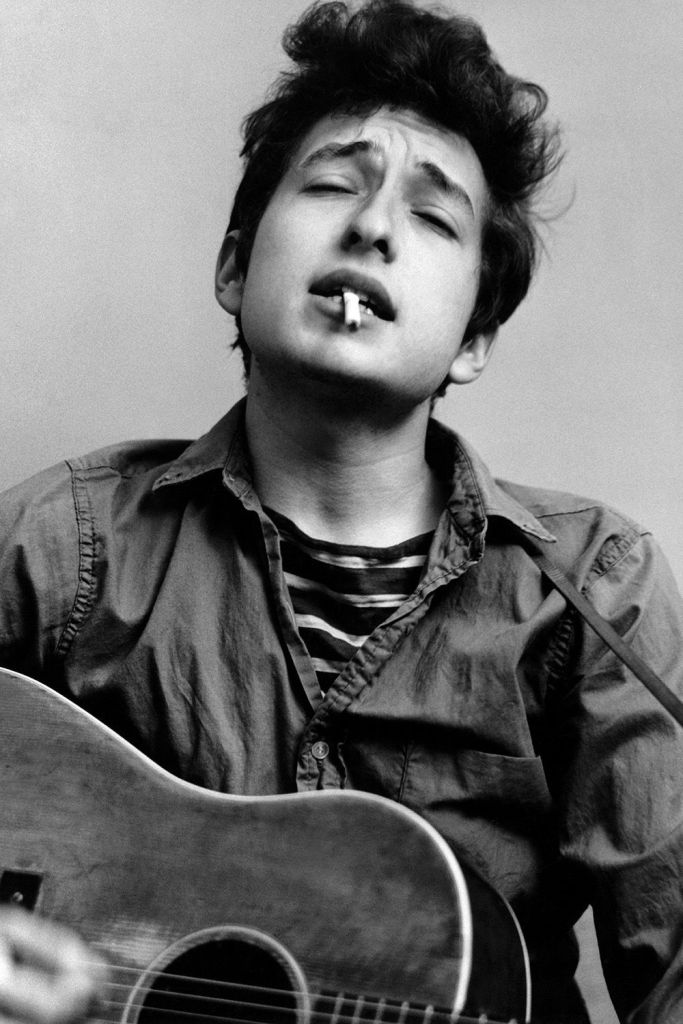
In fact, he’s one of the few living musicians who even had a tribute concert played in his honor in 1992 at Madison Square Garden in New York City. Notable performers playing homage to Dylan included Tracy Chapman, Willie Nelson, Stevie Wonder, Sinead O’Connor and Eric Clapton.
Dylan’s at times provocative music covers a myriad of topical issues including racial injustice, nuclear war and social inequality. One of his most famous protest songs is the well-known song The Times They Are A-Changin.’ The song was written during the 60s in response to the storm brewing around issues including the much-maligned Vietnam War and the civil rights movement. With lyrics like, “Come Senators and Congressman, please heed the call,” “Come critics and writers who prophesize with your pen,” “As the present now will later be past,” the song beckons for change and reminds us that the wheel of fortune is constantly in spin; thereby putting politicians on notice as to the need to implement policies that account for those less fortunate than themselves lest they one day fall on hard times.
The day after President Kennedy was shot dead in Dallas, Texas, in November of 1963, Dylan famously opened a show in Ohio playing this song. Given the events of the prior day, it was one of those solemn, haunting and poignant moments in music history where the lyrics resonated in a profound way because indeed, the times they were a-changin’.
Another of Dylan’s powerful protest songs is entitled Only a Pawn in their Game. It is a sad ode to fallen civil rights hero Medgar Evers, who relentlessly campaigned against segregation at the University of Mississippi. In an apparently racially motivated attack, he was brutally shot outside his home on 12 June 1963. The hospital initially turned him away for racial reasons and by the time he eventually received some kind of treatment it was too late; his injuries were too severe, and he collapsed and was pronounced dead at just 37 years old.
Byron De La Beckwith, a Ku Klux Klan member, was charged with the murder but it took 30 years for Beckwith to face any criminal sanction. Dylan’s song captures the brutality and the sadness of this needless violence. Dylan performed the song at the August 1963 March on Washington, the same event that Martin Luther King famously delivered his “I Have a Dream” Speech.
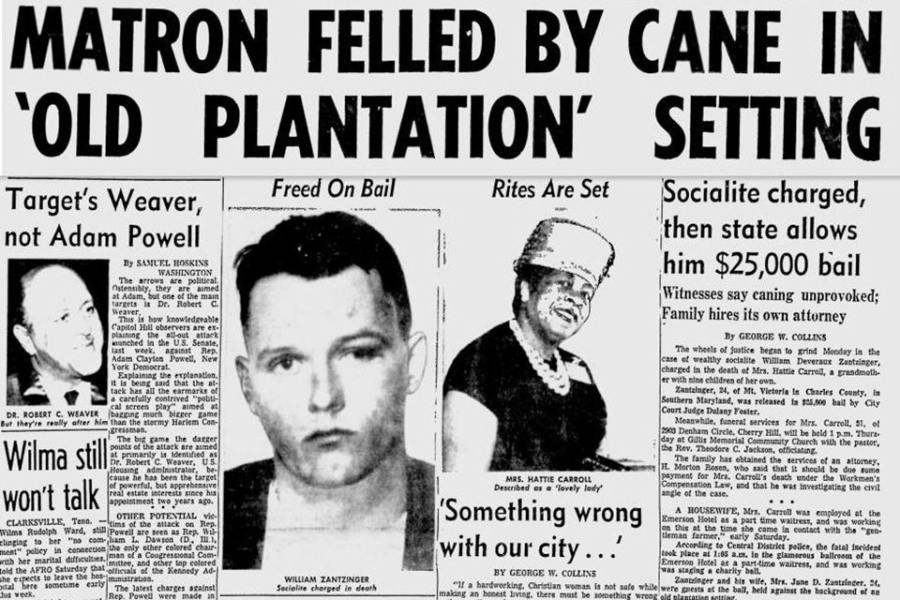
Dylan’s song The Lonesome Death of Hattie Caroll also tugs at the heartstrings and conveys the horror and destruction of racial violence during a tenuous time in American history. In 1963, Hattie Caroll, a 51-year-old barmaid, was assaulted with a cane at a white-tie event by a white patron, 24-year-old William Zanzinger. Zanzinger, the son of a local prominent, wealthy family, had attacked two other black staff members in a drunken rage at the same event earlier that evening. Sadly, Hattie Caroll later died of her grievous injuries.
While he was initially charged with murder, Zanzinger feigned amnesia about the event, stating that he was too drunk to remember it. The corrupt local police downgraded his charge, hit him with a meagre fine and six months in prison, which they delayed, allowing him time to harvest the tobacco crop on his family’s plantation. It’s a case bathed in corruption, and it represents a national travesty. Dylan rightfully called all the complicit bastards out on it with barbed lyrics like,
William Zanzinger killed poor Hattie Carroll,
With a cane that he twirled around his diamond ring finger
At a Baltimore hotel society gath’rin’,
And the cops were called in and his weapon took from him
As they rode him in custody down to the station,
And booked William Zanzinger for first-degree murder.
Followed by an ironic, sardonic and equally charged verse aimed at the corrupt police and justice system,
In the courtroom of honor, the judge pounded his gavel,
To show that all’s equal and that the courts are on the
Level
And that the strings in the books ain’t pulled and
Persuaded,
And that even the nobles get properly handled
Once that the cops have chased after and caught ’em,
And that the ladder of law has no top and no bottom,
Stared at the person who killed for no reason,
Who just happened to be feelin’ that way without warnin’.
And he spoke through his cloak, most deep and distinguished,And handed out strongly, for penalty and repentance,
William Zanzinger with a six-month sentence.Oh, but you who philosophize, disgrace and criticize all
Bob Dylan, the Lonesome Death of Hattie Caroll
Fears,
Bury the rag deep in your face, for now’s the time for your
Tears.
See below newspaper clipping at the time of Hattie Caroll’s tragic death:
Blowin’ in the Wind
Dylan’s star continues to burn bright even now as he enters his 83rd year on this earth. It would fill volumes to conduct a comprehensive deep-dive into Dylan’s contribution as a protest musician, but lest to say he has left an indelible mark on the collective musical psyche. Rolling Stone recognised, quite rightly, Dylan’s skills as a lyricist by giving him the top spot on its Greatest 100 Songwriters of All Time. But Dylan doesn’t seem to be motivated by the accolades, he genuinely appears to care for the social causes that infuse his most compelling and artful songs.
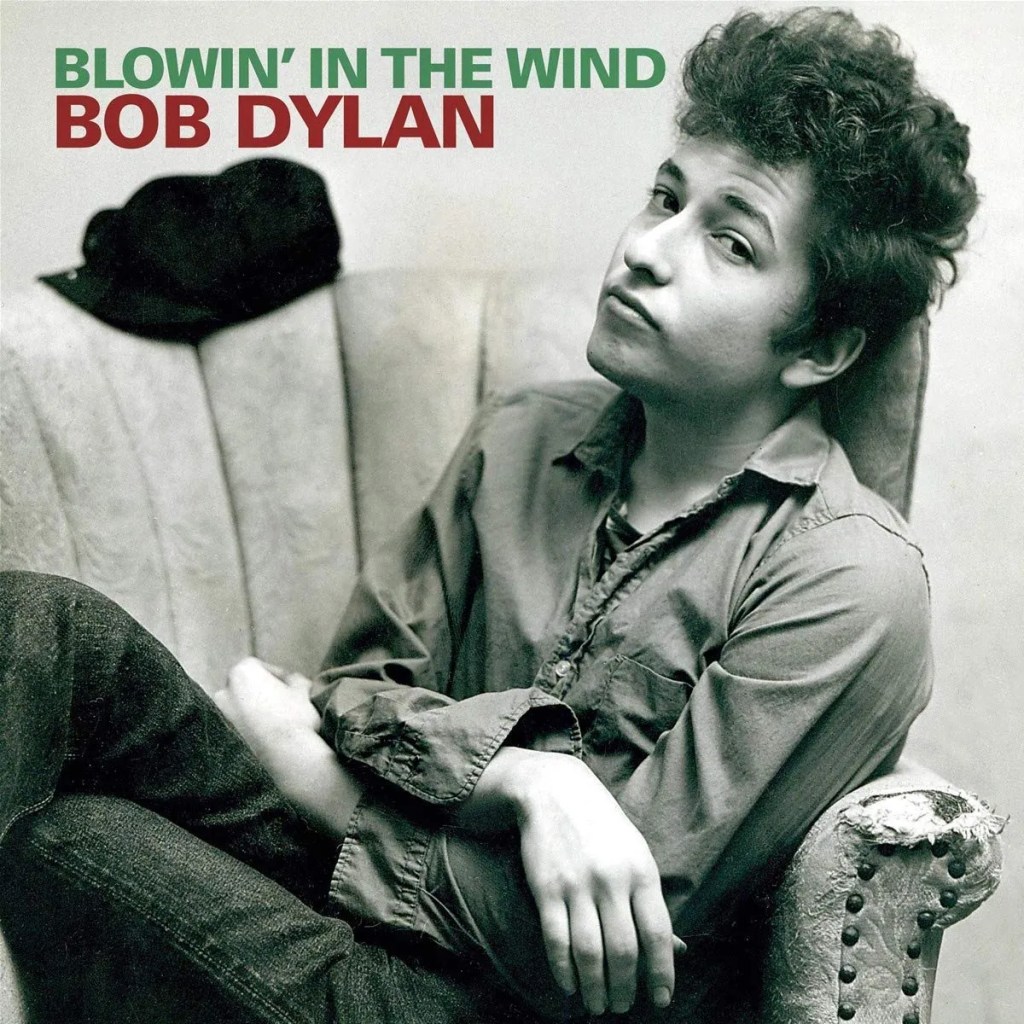
While Sleuth Hound astutely recognises it would be far too cumbersome to cite and analyse all of Dylan’s protest songs (especially given his multi-decade catalogue), it would be remiss not to mention Blowin’ in the Wind. The song’s powerful lyrics once again function as a powerful “fuck you” to history’s many great evils including slavery. The song was released on his second studio album The Freewheelin’ Bob Dylan on 27 May 1963. With lyrics like ‘Yes, ’n’ how many years can some people exist, before they’re allowed to be free?” and “Yes, and how many deaths will it take ’til he knows that too many people have died?” one cannot fail to be moved by the song’s apparent heart-wrenching call for freedom and peace in a broken world. The song offers no real answers, only questions, as epitomized by the ironic lyrics, “The answer my friend is blowin’ in the wind, the answer is blowin’ in the wind.”
As elucidated in this article, music has the power to catalyse change and to stoke the fires of certain socio-political reckonings. The protagonists in this battle are the powerful protest musicians who use their gifts to galvanize public support and attention for causes that matter and strike at the heart of social injustice. While there are many significant protest performers, this article centered on two stand-out artists, Springsteen and Dylan, and the significant contributions each has made by using their music to garner awareness for various hot-button topics and causes. It reminds us that we must remain alive to the corrupt forces underscoring the various political agendas of those who govern us. We each have a role to play in holding the vile bastards to account. To quote Dylan from his song, “It’s Alright Ma (I’m Only Bleeding),” “He not busy being born is busy dying.” So, this is your call to action: do not be idle in the face of unconscionable conduct, take a stand and maybe you too will one day pen your very own protest song too!
 Sleuth Hound
Leave a comment