


Behind the Shale Veil
Peering out across the Bakken Oil Fields, an area that stretches the vastness of Montana, North Dakota, and the Canadian provinces of Manitoba and Saskatchewan, it is not immediately obvious that here lay the resting places of countless souls lost to the bloodied fracking industry. These are the Killing Fields. Sixty percent of the Bakken Oil Fields are located in North Dakota and Montana. Beneath the plumes of smoke billowing out over desolate landscapes dotted by oil rigs, there are many diabolical secrets that those engaged in corporate skulduggery and chicanery would rather keep sequestered in perpetuity. Thankfully, Sleuth Hound has no interest in protecting the moral turpitude of corporate scumbags and is intent on exposing the corruption at the heart of the whole fracked up industry.
While business has oscillated from Bust to Boom out here on the Bakken Shale, punctuated by a meteoric rise in the oil industry between 2006 and 2014, recent reports elucidate there may be a resurgence in the industry on the horizon. For now, the cooling off may be attributable to the Biden Administration’s marked pivot away from reliance on fossil fuels (although other parts of the country retain flourishing oil markets). Whether or not these rigs resurge, there is one unequivocal certainty, these badlands are haunted by the ghosts of those who perished in the collateral of the Bakken Boom.
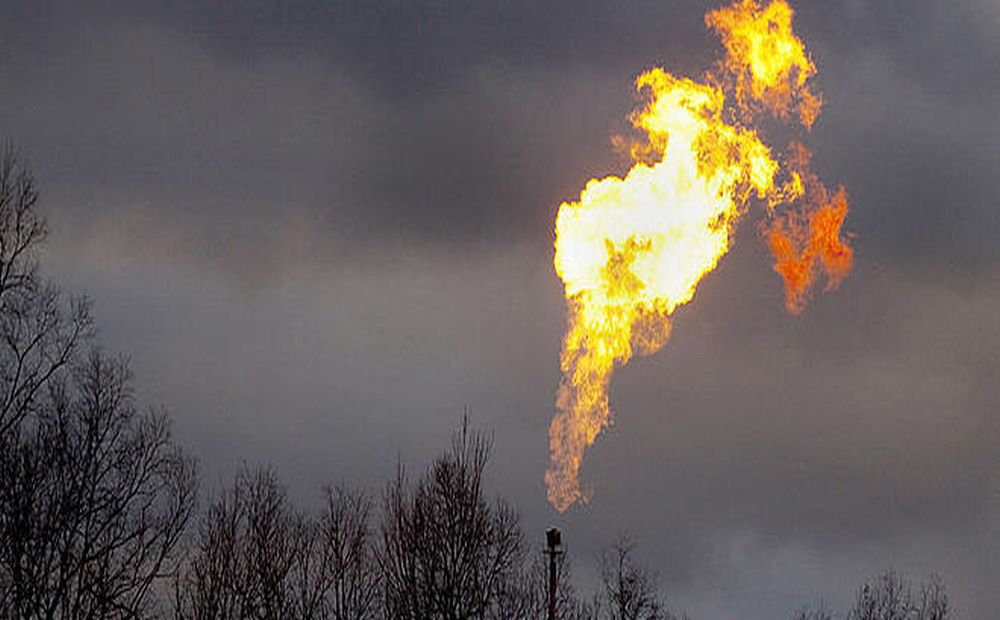
Bakken Oil Feilds, Source: Google
According to a 2015 Occupational Safety and Health Administration (OSHA) report there have been 74 deaths in the Bakken oil fields since 2006. However, this number is likely conservative in view of the fact that OSHA does not account for independent contractors in its head count. OSHA, the regulatory body responsible for oversight of health and safety in the oil industry, has been criticized for its ineptitude and for the fact that it is ultimately answerable to Washington DC’s legislature and the inevitable stranglehold of oil lobbyists at Capitol Hill. Throughout the Bakken Boom OSHA only stationed 9 officers across the entire Bakken shale and many workers reported never seeing an OSHA worker inspect any sites.
The Harrowing Case of Dustin Bergsing
The poignant case of 21-year-old Dustin Bergsing who died in January 2012 is a visceral and frightening reminder of the dangers of the entire bloodied and fracked up industry. Compared to other jobs on an oil rig, Bergsing’s job was relatively safe. He was a well-watcher tasked with the responsibility of checking oil levels in tanks. He worked, often alone, doing long shifts for a contractor of Marathon Oil called Across Big Sky Flow Testing. One frigid January evening he climbed atop a crude oil tank and dipped his rope in to check the oil levels. He was found dead in the early hours of the morning. The “official version of events” spouted by the company’s Word Salad Department was a classic case of “nothing to see here.”
It was thanks to a brave whistleblower who came forward after Bergsing’s mother launched civil action that the truth was uncovered. During discovery, a chemical engineer working on the site brazenly spoke out about hazardous practices at the rigs. His insights were shared anonymously on a Prairie Public Radio report aired September 12, 2013.

Dustin Bergsing, Source: Google
The witness, who lost his job as retaliation for speaking out, revealed that crude oil emits hydrocarbons. If this gas is not appropriately captured and defused it can cause a deadly smog which can suffocate a person. The witness had been in the employ of Marathon Oil since October 2011, and during the course of his engagement, he had concerningly noticed that there were numerous hydrocarbon leaks and that the gas was not being properly captured by flares. Ideally at least two flares should be stationed per oil tank but often only one was in place and as such the risk of created by hydrocarbon smog was not properly ameliorated. He also noted other failings and short-cuts being taken including that piping was undersized during flowback. He began to conduct measurements on the air quality around the tanks, stating that the conditions were simply not “breathable.”
While the man had raised the alarm about the aforesaid concerns, his attempts to bring the issue to attention were met with nonchalance and apathy. In fact, he said that he was “punished” for speaking out against this toxic culture. Therefore, rather sagaciously, and in an act of fortuitous foresight, he decided to capture the leaks on an infrared camera. It was these noxious leaks, he said, that had fatal consequences in the Bergsing case. Ultimately the parties reached a settlement in February 2013, with Marathon Oil finally admitting liability, most likely in view of the weight of the evidence against its murky safety practices and protocols.
Disturbingly, Dr Bob Harrison (with the help of reporter Mike Soraghan) discovered 9 other similar deaths at the site where workers had been found dead on oil pads. The pair developed the theory that these workers had inhaled large quantities of petroleum after lifting open the oil-tank hatches. It is understood that safety standards were extremely poor on the site and that it was always about the bottom line. At least six of these families launched civil action in endeavors to seek compensation.
More Smog and Mirrors
While the above cases are horrifying enough, these are hardly isolated events. In a documentary aired on Fault Lines, Death on the Bakken Shale, other families expressed their grief over loved ones that have perished in the Bakken Badlands.
One such case is that of Dustin Payne, 28, killed in an explosion in October 2014. Payne, a former marine, flocked, like so many young people, to the Bakken oil fields in pursuit of the promise of easy money. He was stationed as a welder on a site operated by Nabors Completion and Production Services (NCPS) whose corporate successor, C & J Wells Services, faced legal action over the matter. In the weeks preceding his death, Payne expressed concern over safety conditions at the site. In a text to a family member, Payne said, “I’m literally going to be welding something that’s full of oil… Don’t [feel] comfortable welding this at all. Dangerous as fuck.”
Mere weeks later a devastating explosion claimed Payne’s young life. In contravention of federal law, he was welding on unclean tanks and therefore interacting with highly flammable chemicals which had such fatal consequences in his case.
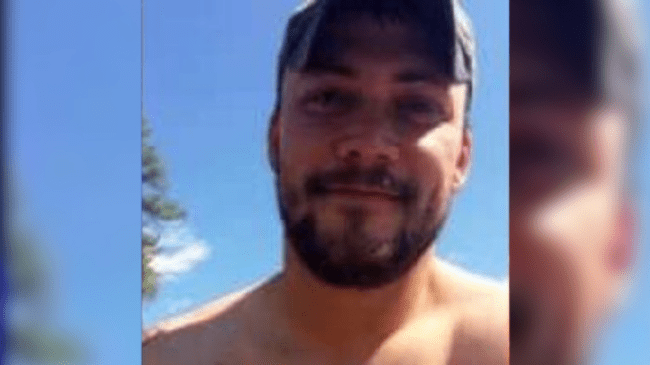
Bakken Oil Victim, Dustin Payne, Source: Google
Attorney, Steve Little, based in Bismark, North Dakota’s capital, stated, “These workers come to North Dakota, get chewed up and go home to recover. I get calls from attorneys in other states all asking the same question: What in the hell is going on up there?!”
The Case of Jeremy Dagget and his Brother Brandon Belk
Another somber case is that of Jeremy Dagget and his brother Brandon Belk. The brothers were working for Badlands Powerfields, another corporate giant with its hand in the cookie jar, when matters went disastrously wrong. Similar to the above cases the brothers were dealing with tanks that contained noxious and carcinogenic materials.
One day Brandon was cleaning tanks at the site, and, because he was not wearing a safety respirator, he inhaled noxious chemicals. Later that day Brandon began vomiting and over the next few days his condition worsened as blood began to spout from his mouth and nose. He was admitted to hospital wherein he presented with chemical burns in his throat and this otherwise young and healthy man subsequently succumbed to his injuries: another ghost haunting the badlands.
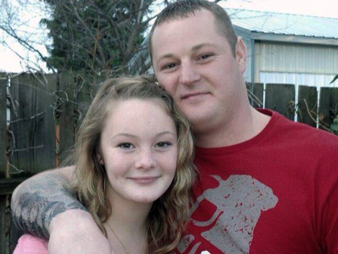
Bakken Shale victim, Brandon Belk, Source: Google
Infuriatingly, many companies in the region have tried over the years to obviate liability for poor safety standards, by hiding behind complex corporate structures with multiple subsidiaries. Thankfully, in some cases, it has been possible to pierce the corporate veil and hold parent companies to account. The use of complex corporate entities to mitigate liability is a common strategy and was seen in the James Hardy asbestos case where the corporate giant attempted to evade liability for causing mesothelioma in countless people.
OSHA believes that issuing meagre fines (often in the vicinity of a few thousand dollars) to oil companies is a sufficient deterrent. However, pathetic fines are unlikely to incentivize these scumbags into improving their safety protocols when the reward for cutting costs is so lucrative and illustrious.
Of course, the above deaths are bad enough, but these figures do not account for those who have suffered non-fatal injuries. According to data collected by Workforce Safety and Insurance (WSI) over 9000 insurance claims were made between 2009 and 2013, many of these pertaining to serious life changing injuries.
Fracked Up: The Spoils of Tribal Oil
The oil industry is a magnet for corruption, and this skullduggery has spilt over into tribal reservations retained for use by Native Americans. A Times documentary covers at length the debauchery that happened on the Fort Bethold Reservation, involving then Mandan, Hidatsa and Arikara Nation Tribe Chairman, Tex G Hall. See below the full Times exposé:
In summary, Tex G Hall, commandeered the Boom on the Fort Bethold Reservation, calling for “Sovereignty by the Barrel,” stating that he didn’t want to be answerable to the “Great White Fathers of Washington DC.” Hall became embroiled in a complex murder-for-hire plot which his former buddy, James Henrikson has been charged over. However, other problems arose in relation to safety and some massive oil spills which have destroyed sacred land.
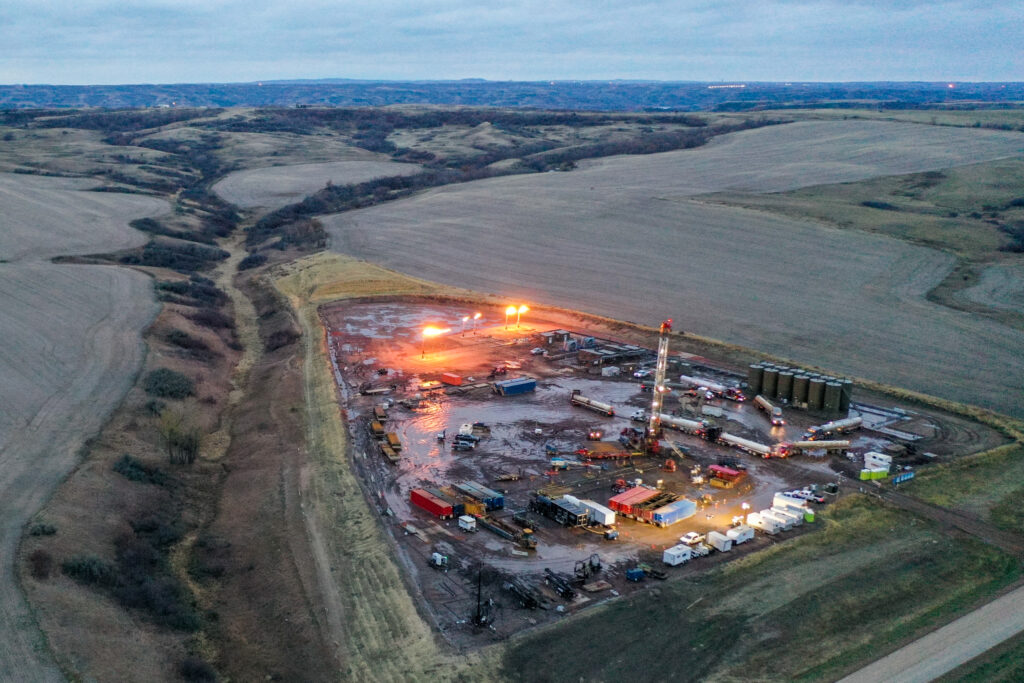
In the summer of 2014, there was a particularly catastrophic spill wherein a pipe broke, leaking millions of hazardous gallons onto the reservation. Reservation resident, Lisa DeVille, has spoken out against the creation of new pipelines. Lisa states:
My name is Lisa DeVille. My Indigenous name in white man’s language is, “Accomplishes Everything.”
Every day, we witness the environmental, health, and social impacts of living on the front lines of oil and gas extraction. We are losing our way of life because we are allowing Mother Earth to be killed as pipelines are dug into the earth as if they are her blood veins. At least 18 pipelines cross under Lake Sakakawea. I strongly oppose Keystone XL pipeline because I have seen up close and personal what pipelines can do when they malfunction.
Lisa DeVille
Lisa goes onto discuss in great detail in an open letter the heart-wrenching and catastrophic consequences that the fracking industry has had on the well-being of livelihood of First Nation people living on the reservation. It is also rather precarious for members of the reservation to be so economically reliant on an industry so vulnerable to boom and bust.

Lisa DeVille and her young family, Source: Google
Fracking Hell: The Future of Fracking
While Sleuth Hound has outlined some of the deleterious ramifications of the fracking industry, a much more detailed exposition is needed to unveil the deep-seated problems at the heart of the industry. While fracking is slowing is some parts of the world, particularly where climate change activists have acquired a legislative foothold, it remains a burgeoning industry in many parts of the world.
Concerningly, there are plans to tap into more oil reservoirs across the Gulf of Mexico, into the foothills of the Front Range in Colorado and throughout the Appalachian Mountain region. There are significant oil works planned for a region known as the Permian basin located primarily in Texas. There are significant concerns among environmentalists about the impacts of these planned drilling exercises both in general environmental terms and how this may contribute to climate change.
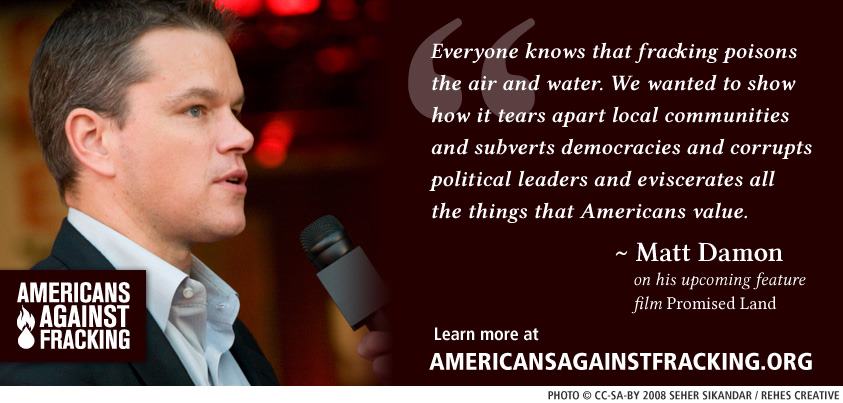
Catalyzing change when the spoils of oil are so attractive is always going to be an uphill battle. However, the anti-fracking movement is gaining momentum, supported by numerous heavy weight celebrities including, inter alia, Lady Gaga, Susan Sarandon. Matt Damon has also been a passionate advocate:
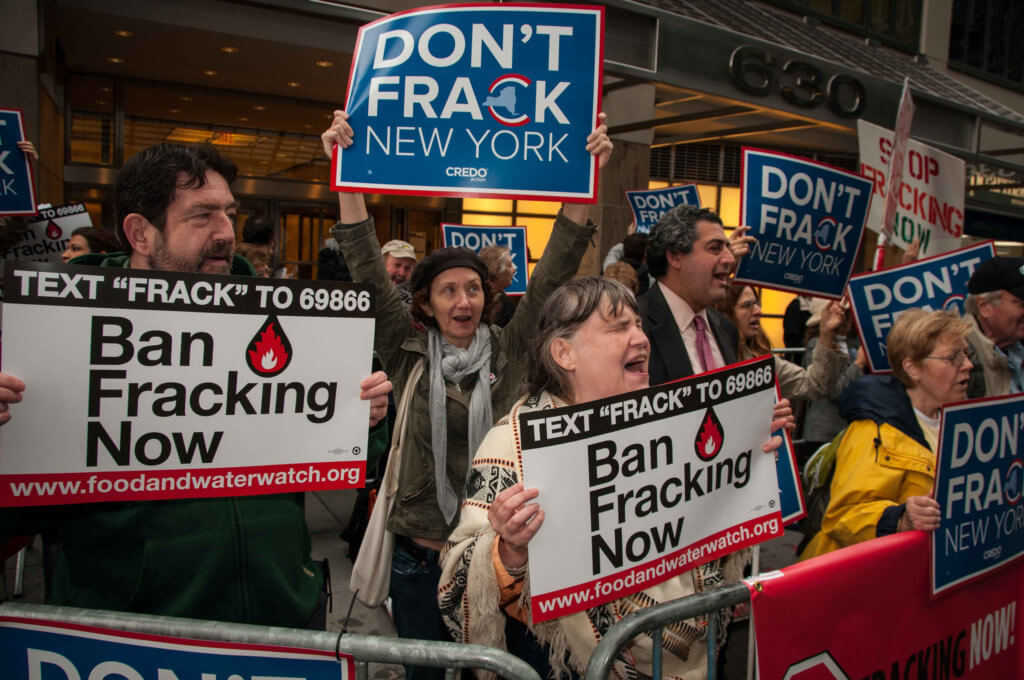
And here some fracked off activists assemble to call for an end to fracking:
Ultimately, it’s up to consumers to tell the oil industry to “get fracked!”
 Sleuth Hound
Leave a comment